Partnering with North Carolina Land and Water Fund, National Park Service Blue Ridge Parkway, the Town of Blowing Rock, NC, the Middle Fork Greenway, and NC DEQ Division of Nonpoint Source Planning, the New River Conservancy has completed restoration of thousands of feet on the banks of the Middle Fork of the New in Blowing Rock, NC. This restoration has taken years of persistence and patience of all parties through Covid, personnel changes, and the devastation of Hurricane Helene. Andrew Downs, Executive Director for the New River Conservancy: “Our DNA at New River Conservancy is in projects that transform the watershed. The Middle Fork restoration is indicative of that and will benefit many in the Upper New River watershed and beyond.”
The challenge
Between the Town of Blowing Rock Water Treatment plant and the Blue Ridge Parkway, a 2,000 linear feet swath on the banks of the Middle Fork of the New River threatened infrastructure at the water treatment plant and contributed sediment to trout waters. Sediment is the number one threat to aquatic life in our rivers, creeks and streams.
The 2,000 linear foot stream was highly unstable, with eroding streambanks, and limited riparian vegetation. The channel was generally located along the right side of the valley, against a steep valley wall, but one area, where the stream swung to the left, threatened a building of the Blowing Rock Water Treatment Plant.
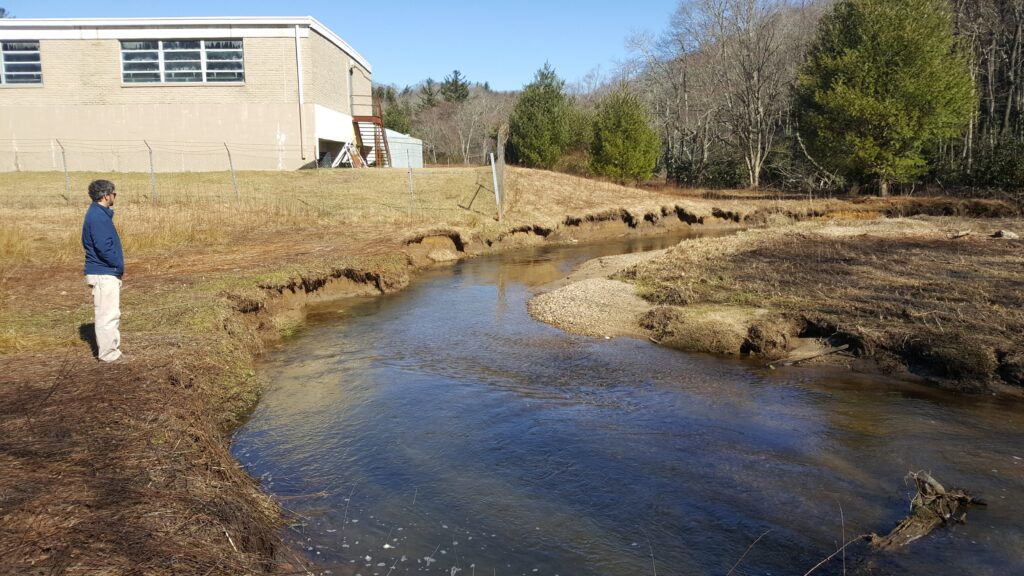
Middle Fork of the New River before restoration.
The plan
The restoration project plan was to realign a channel, plant native species to help riparian buffers, stabilize the stream banks, improve stormwater conveyance from highway 321 and enhance the floodplains with vernal pools and improve wetland habitat.
By restoring the river to more natural conditions, we have eliminated downstream sediment loading to the New River by installing rock structures to stabilize the bank, sloping the bank to allow the river to have access to the floodplain, and restoring the native, woody vegetation to hold the soil in place.
Restoration also improves the diversity of habitat both for aquatic and terrestrial species with the addition of rock and log structures in the channel and with the planting of native riparian species. Salt from the nearby HWY 321 winter road conditions is also a common threat to water quality in this area.
This restoration will reduce the threat of surface water pollution by installing off-line wetland areas and fully restoring the riparian buffer to allow surface water to be filtered before entering the Middle Fork.
The celebration
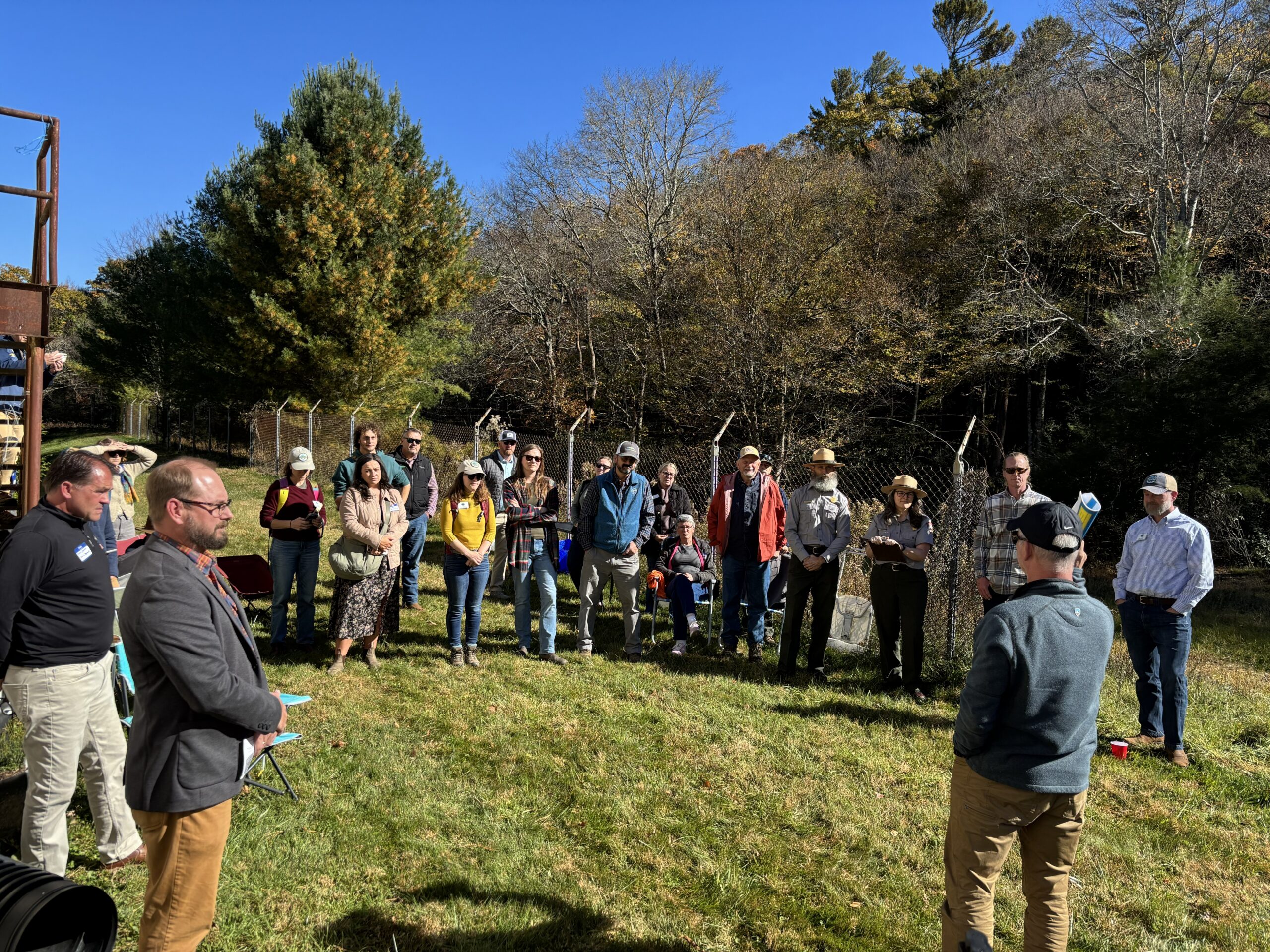
A celebration of the restoration completion was held at the site on the banks of the Middle Fork on Friday, October 23, 2026. Many partners were present and several spoke of the effort including David Ray, Executive Director, Blue Ridge Conservancy, Shea Tuberty, Professor of Biology, Appalachian State University, Brian Johnson, Zoning Enforcement Officer, Blowing Rock, Shayna Graham, Assistant Superintendent, Blue Ridge Parkway and Will Summer, Executive Director, NC Land and Water Fund.
“I think projects like this are an important part of living with water and making ourselves more resilient to extreme weather,” said Will Summer, Executive Director of the North Carolina Land and Water Fund. “We are grateful to NRC and other partners for turning our grant funding into something meaningful that will benefit this community for years to come.” New River Conservancy is proud to partner with these organizations on this and many other projects throughout the watershed.
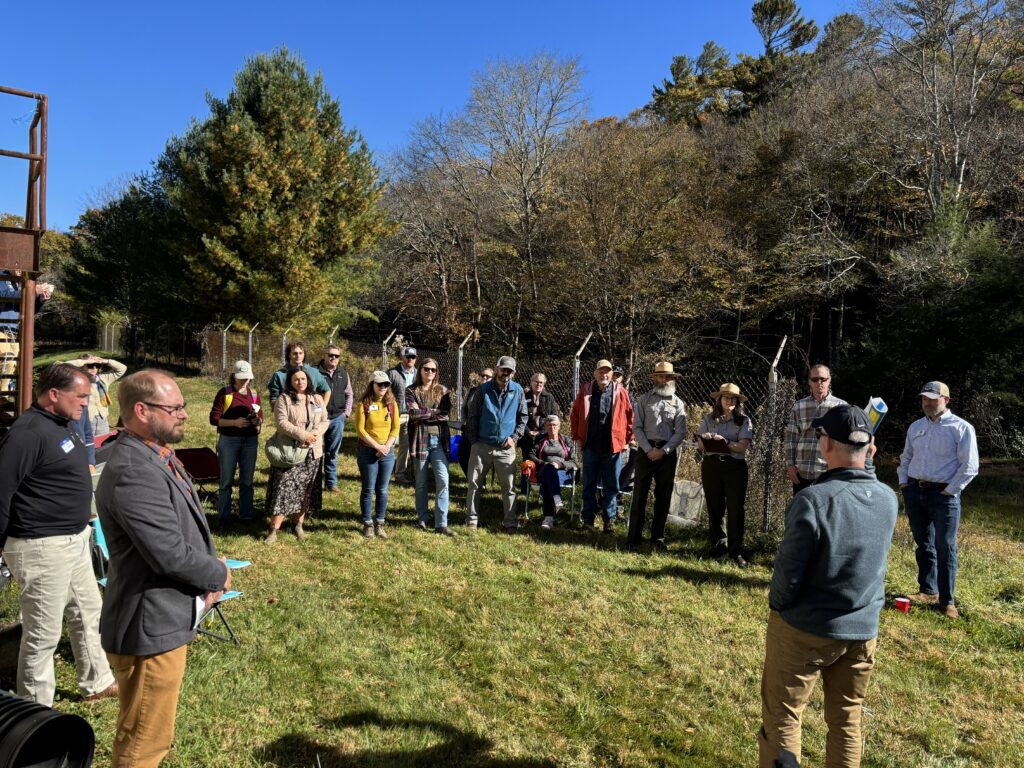
A crowd gathers to celebrate the completion of the Middle Fork restoration on October 23, 2026.
The future
This project will also give the river much needed floodplain access. The Middle Fork is incised in many places and floodwaters were once constrained within the channel throughout much of the project site. With access to the floodplain. The flood storage capacity of this site is now increased, which will allow floodwater to penetrate the ground and reduce the overall amount of water making its way downstream to the Town of Boone, where flooding is a regular nuisance and danger. According to Steve Bevington, Conservation Program Manager for the New River Conservancy, “This project is a small but important step in restoring the natural ability of floodplains within the New River Watershed to retain and soak up water and so mitigate downstream flooding. At the same time, the stable stream banks and newly planted native vegetation will provide better habitat for fish and enhance the excellent water quality for which the New River is known.”
The Middle Fork Greenway is committed to putting the health of the river first and wants to make sure that this greenway and other recreational spots are built responsibly and sustainably. This supports the goals of New River Conservancy and our river restoration projects. A stable and healthy Middle Fork New River means that the Greenway won’t be threatened by eroding streambanks and that visitors can enjoy a fully restored riparian buffer and all the aesthetic benefits of a healthy and forested river ecosystem.
In partnership with Middle Fork Greenway, New River Conservancy plans to install educational signage along the Middle Fork Greenway Trail, where the public can access the river and also learn about the restoration project as well as the importance of riparian buffer habitat and water quality.
New River Conservancy members, staff and board have worked for over 50 years to protect the waters, woodlands and wildlife of the New River watershed. You can too. Join us. New River Conservancy is a 501(c)3 non-profit organization. All donations are tax deductible.
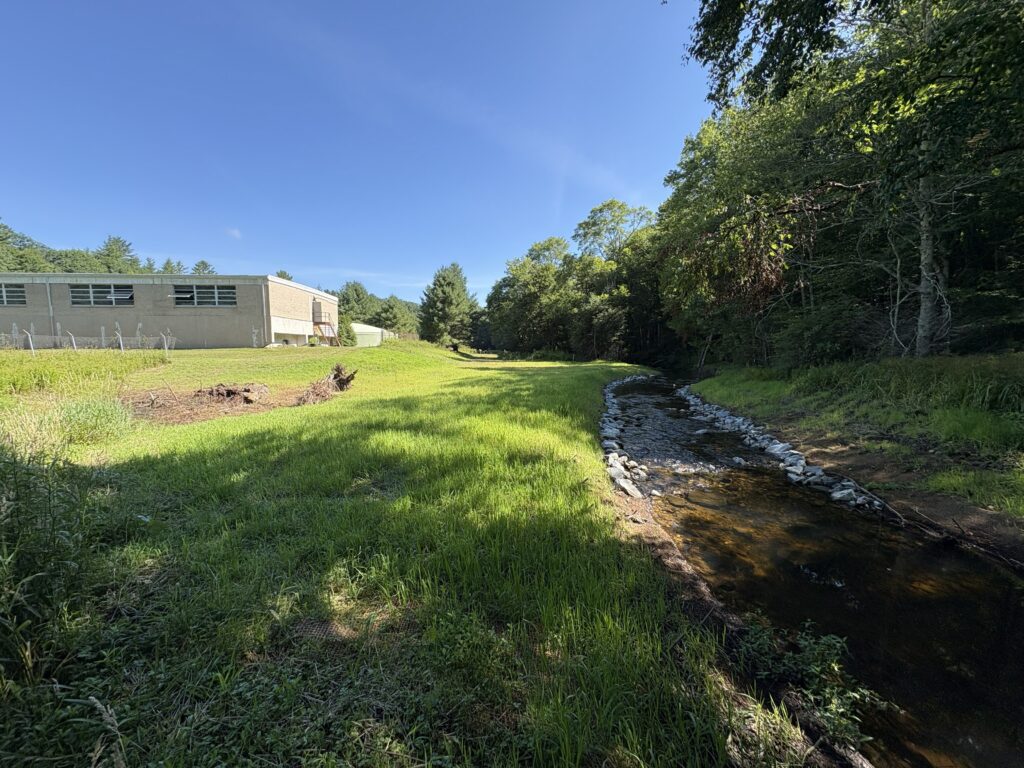
Successful restoration of the Middle Fork of the New River in Blowing Rock, NC.