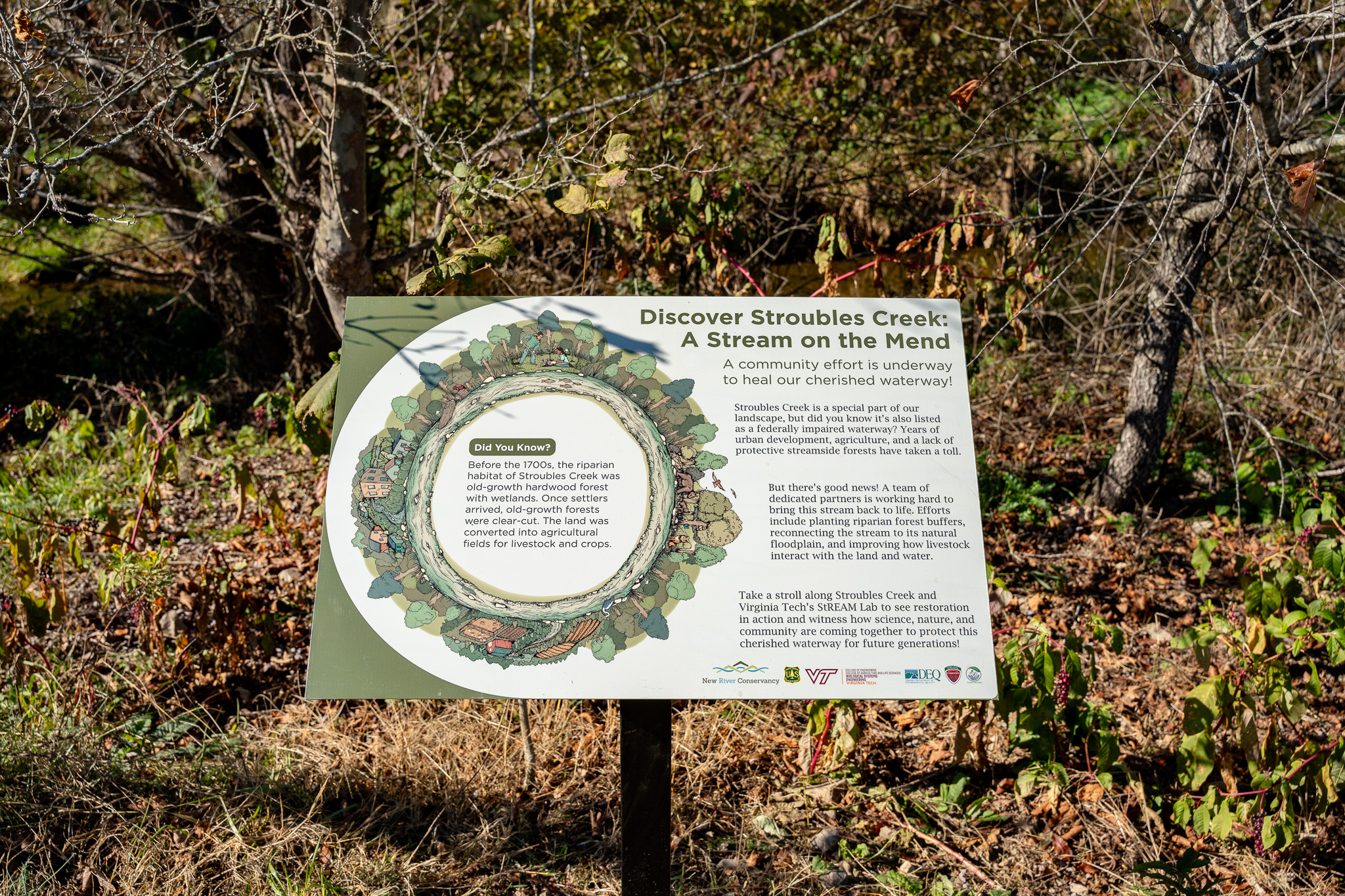
New River Conservancy (NTC) is pleased to be able to announce recent new signage along the Huckleberry Trail in Blacksburg, Va on Stroubles Creek. Five signs highlight the work of many partners to restore the streambanks along this creek, designated as an impaired waterway by the Virginia Department of Environmental Quality since the late 1990s from a variety of stressors from urban, suburban, and rural land use. The sign design was created by Chrysta Kay Art, and is based on the written work of the late Aldo Leopold, “Round River” describing a river that “flowed into itself, and thus sped around and around in a never ending circuit” and feeds itself and the ecological systems that depend on it.
According to Tom Saxton, Virginia Restoration Ecology Program Manager for NRC, and co-founder of The Big Plant on the campus of Virginia Tech, the goal of the signage is to “Connect readers to the resource and realize the interdependence of all things and how humans rely on a healthy environment to thrive and survive.” Saxton continues with “We want to give readers a sense of self-efficacy over environmental problems. Everyone’s in a position to make a positive difference.”
Stroubles Creek is a direct tributary to the New River, flowing 12 miles, most of which is piped under the city of Blacksburg and the campus of Virginia Tech. The main branch of Stroubles springs its headwaters in the heart of Blacksburg. Because of this, it winds beside roadways, picking up oils, trash, and anything else that washes off in rain events. It flows over and through channelizations before sinking underneath Virginia Tech’s drillfield for over half of a mile and resurfacing for about 500 feet before flowing into the Virginia Tech Duck Pond.
“The town of Blacksburg is largely here because of Stroubles Creek,” said W. Cully Hession, a professor of biological systems engineering. “So, really, the university’s here because of the creek.” Hession is the director of Virginia Tech’s StREAM Lab, which focuses on studies related to stream rehabilitation efforts. One of the goals of the associated research is removing Stroubles Creek from the Clean Water Act’s list of impaired waters.
Communications Director for NRC, Lisa Stansell – Galitz, says “This project has been several years in the making, and we are thrilled to be able to offer folks the opportunity to learn about the restoration work along Stroubles, the importance of a riparian buffer and the value of native plants and trees to the wildlife community in the New River watershed.” Saxton added “Virginia Tech students and community members are an integral part of the restoration of Stroubles Creek and the Huckleberry Trail area. Everyone plays a part and the goal of this project is to prove that.”
Community members and students will connect with the Huckleberry Creek watershed and learn about the surrounding ecosystem and how to continue to protect it through the waysides/interpretive signs made from this project.
The Conservancy wishes to thank the generosity of donors that bring this signage to life; Shabiba Hasan who helped with the sign layout; Jenna Behnke who helped with content; Dr. Marc Stern’s Environmental Interpretation course at Virginia Tech; and Tom Saxton, who worked on all phases of this project. Additionally, the volunteers who helped with the installation of these signs. The NRC invites the public to stop and ponder their own role in restoring not only Stroubles Creek, but the ecosystem they inhabit and need to survive.
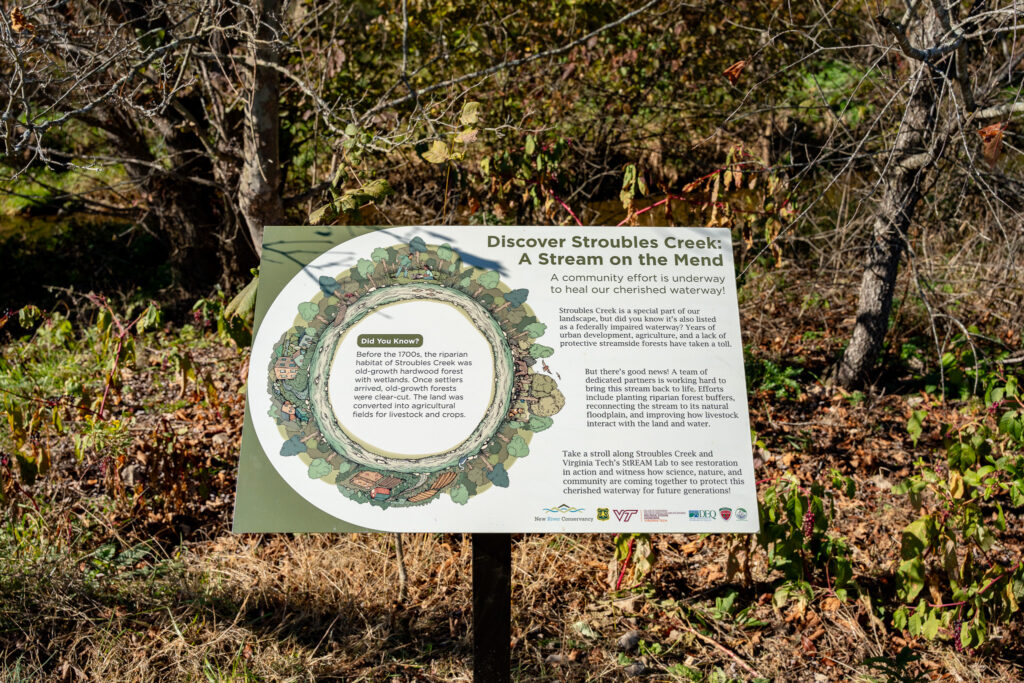
One of the new signs installed by New River Conservancy along Stroubles Creek in Blacksburg, VA to highlight stream restoration.
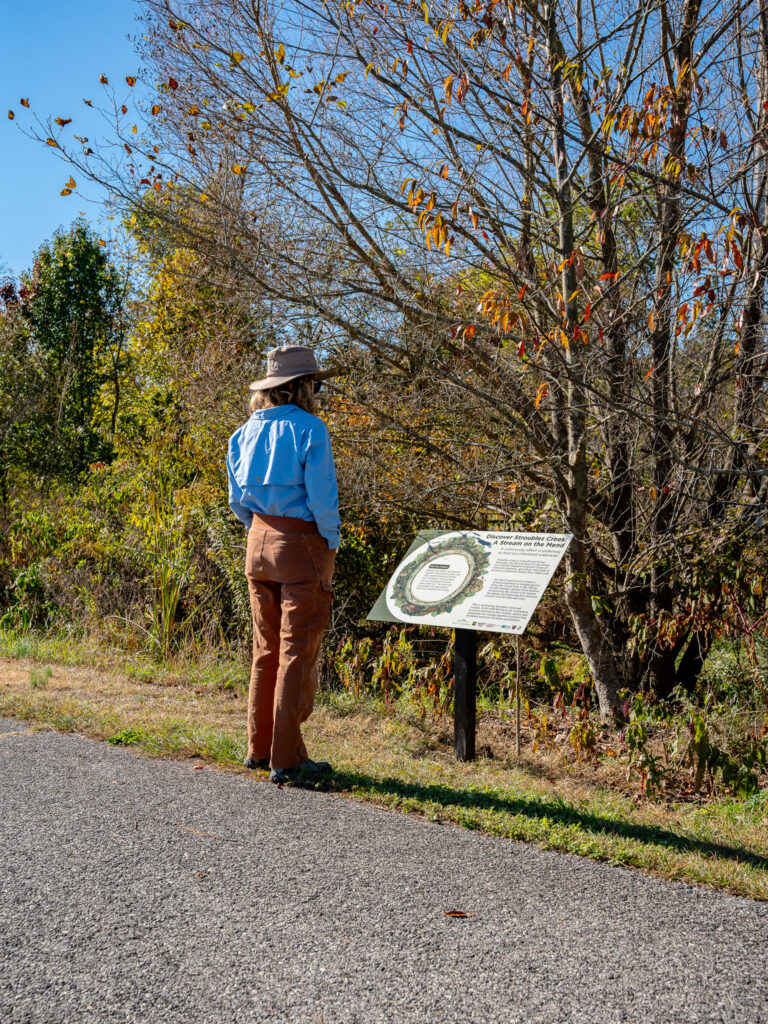
Celia Haney White, NRC VA Clean Up Coordinator, stops along the Huckleberry Trail to see the new signage she and Sydney Haney White, NRC VA Clean Up Coordinator, installed in late October 2026.
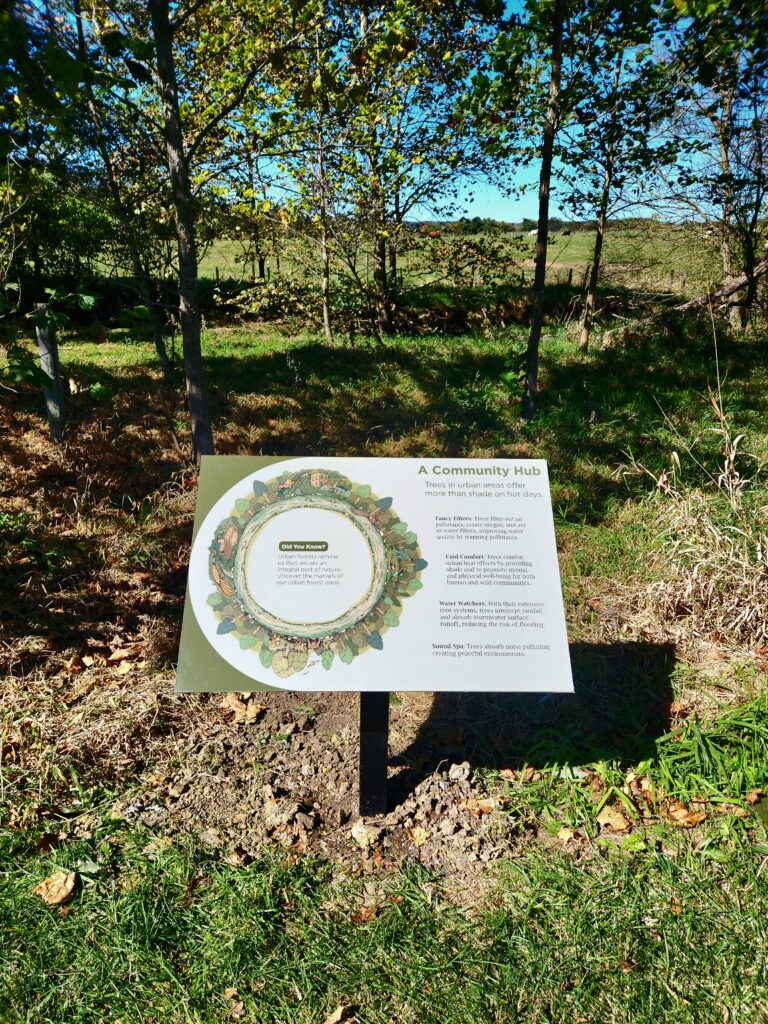
One of the new signs installed by New River Conservancy along Stroubles Creek in Blacksburg, VA highlights the importance of community in the watershed.
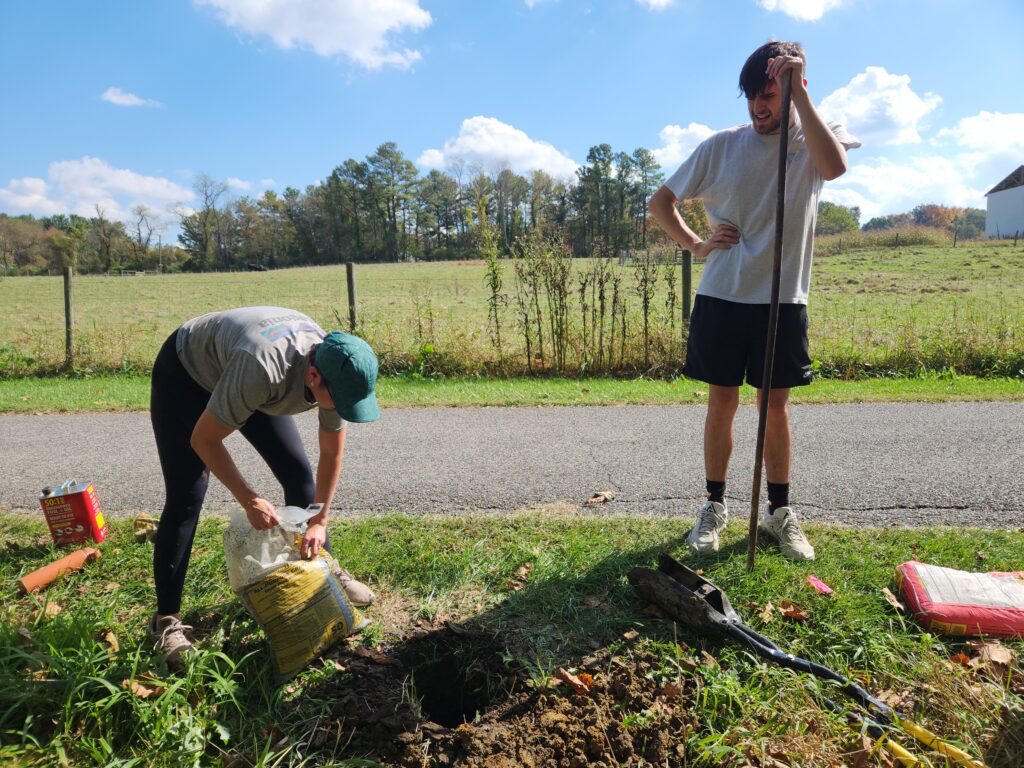
Volunteers help with the installation of the new signage along Stroubles Creek in Blacksburg, VA on the Huckleberry Trail.
New River Conservancy is a 501(c)3 non-profit whose mission for over 50 years has been to protect the woods, waters and wildlife of the New River watershed. Their primary programs include riverbank and riparian restoration, land protection, advocacy, volunteer-based river clean-ups, water quality monitoring, and community engagement. For more information please visit www.newriverconservancy.org or contact info@newriverconservancy.org